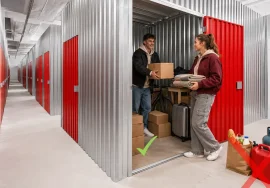

Sorting an estate? Learn what to keep, pass on or store, and how to protect inherited furniture and belongings in Budapest.
Sorting an estate: what should you do with inherited furniture and personal belongings?
When sorting an estate, you do not have to make an immediate and permanent decision about every inherited item. Start by creating a photographic inventory and setting aside anything with legal or financial importance. Then divide the remaining belongings into five groups: keep, pass on to a family member, sell, donate or store temporarily. A rented storage unit can give you the time and space to make a considered decision about suitable furniture, books, clean textiles and properly prepared household items.
Quick answer: how should you start sorting inherited belongings?
Do not begin by throwing things away. Photograph each room, prepare an inventory and consult the other heirs before sorting anything. Keep what you will genuinely use. Pass agreed items on to family members. Sell or donate useful belongings that nobody needs. If you are not ready to decide, place suitable and permitted items in temporary storage.
Why should you avoid rushing when sorting an estate?
Clearing an apartment is a major task even in ordinary circumstances. When an estate is involved, emotional pressure, family discussions and official administration can make the process much harder. It is easy to fall into one of two extremes: keeping everything because letting go feels too difficult, or disposing of items too quickly because a deadline is approaching.
According to the Hungarian Chamber of Civil Law Notaries, during the Hungarian probate process the municipal clerk prepares an estate inventory and the civil law notary takes the necessary steps on the basis of that inventory. The final probate order identifies the deceased person's legal successor. If it is unclear who may decide about an item, or whether it may be sold or given away, seek official guidance first. Further information is available in the MOKK guide to probate proceedings in Hungarian.
This article is a practical storage guide and does not constitute legal advice. If ownership is disputed, several heirs disagree or probate proceedings are still in progress, do not sell or give away belongings without appropriate consultation.
Document first, sort second
Before moving anything, take overview photographs of every room, cupboard and large piece of furniture. Then create a simple inventory. You do not have to list every small object individually at the beginning, but valuable, disputed or personally important items should be recorded accurately.
A useful inventory should contain at least the following information:
- the name and a short description of the item;
- the room in which it was found;
- its condition and any visible damage;
- one or more photographs;
- the name of anyone who has expressed an interest in it;
- the next step: keep, pass on, sell, donate or store.
Number each box while packing and use the same number in your inventory. Avoid vague labels such as "miscellaneous". Use specific descriptions instead, for example "07 - books and old correspondence" or "12 - kitchen porcelain, 18 pieces".
Five options for every inherited item
| Decision | When could it be the right choice? | Next step |
|---|---|---|
| Keep it | You will use it, it fits your home or it is an important personal keepsake. | Mark it in the inventory and move it to a suitable place. |
| Pass it on to family | Another relative would like to use it or considers it particularly important. | Agree on the decision and record who is taking the item. |
| Sell it | It is in good condition, but nobody in the family needs it. | Clean, photograph and measure it, then choose an appropriate sales channel. |
| Donate it | It is usable, but selling it would not be worthwhile or would take too much time. | Ask the chosen organisation in advance what it can accept. |
| Store it temporarily | You have no space, the property must be cleared soon or you are not ready to make a responsible decision. | Prepare an inventory, pack permitted items correctly and choose a suitable storage unit. |
When can temporary storage help?
Renting a storage unit does not mean placing every inherited object out of sight indefinitely. It can create the time and physical space you need to avoid making irreversible decisions under pressure.
Temporary storage may help when:
- an inherited property must be cleared within a short deadline;
- rooms need to be emptied before the property can be sold, renovated or rented out;
- several heirs need more time to reach an agreement;
- you would like to use the inherited furniture later;
- the home where the belongings will eventually go is not ready yet;
- you want to organise and photograph items before selling them;
- making an immediate decision would be emotionally too difficult.
What inherited belongings can you place in a rented storage unit?
Clean, dry, correctly packed and legally permitted everyday belongings can usually be stored safely. Examples include:
- furniture in good condition;
- books and ordinary documents;
- completely clean and dry clothes, bedding and textiles;
- properly prepared household appliances;
- kitchen utensils and household equipment;
- sports and seasonal equipment;
- non-perishable and non-hazardous everyday items.
Always check the exact storage conditions before moving anything in. Our What can you store in a storage unit? guide provides a more detailed overview.
What should not be placed in a rented storage unit?
An estate may contain belongings that require specialist protection, professional valuation or a different type of secure environment. City Storage units must not be used to store money, jewellery, securities, food, living creatures, hazardous or illegally obtained materials, weapons, ammunition, waste, works of art, irreplaceable possessions or items with exceptional sentimental value.
Important: do not place irreplaceable family photographs, original legal documents, unique correspondence, works of art or highly sentimental keepsakes in a standard rented storage unit. Keep them with you or seek specialist advice on preservation, archiving, secure custody or valuation.
How should you prepare inherited belongings for storage?
Furniture
Photograph furniture before dismantling it, then clean it and allow it to dry completely. Disassemble larger pieces where possible. Place screws and fittings in labelled bags and attach each bag to the appropriate furniture component. Protect corners with cardboard or corner protectors and cover surfaces with breathable materials. You can find additional practical advice in our guide to storing furniture during a move.
Books and ordinary documents
Use small, strong boxes because books quickly become heavy. Pack books only when dry and place them upright or flat without squeezing them too tightly. Do not place boxes directly on the floor. Organise documents by subject and separate anything that should not go into general storage because of its legal, financial or personal importance.
Clothes and textiles
Pack only completely clean and dry textiles. Fabrics stored while damp or stained may deteriorate and develop unpleasant odours. Vacuum bags can save space, but they are not always suitable for delicate or natural materials over longer periods.
Household appliances
Defrost, clean and dry refrigerators and freezers, then leave their doors slightly open. Drain any remaining water from washing machines and dishwashers. Secure cables, protect moving parts and keep the operating instructions where possible.
Boxes
Use strong boxes of similar sizes because they are easier to stack safely. Write the inventory number and a short description of the contents on at least two sides of every box. For a practical packing system, read our guide on how to pack your storage unit smartly.
What size storage unit might you need for inherited belongings?
The required size does not depend only on the floor area of the inherited property. The amount of furniture you are keeping, the number of boxes, whether large pieces can be dismantled and whether you need an access aisle inside the unit are all more useful factors.
For an initial estimate:
- count the boxes;
- measure the larger pieces of furniture;
- mark which items can be dismantled;
- take photographs showing the full quantity;
- decide whether you will need access to individual items later.
Our guide What size storage unit do I really need? provides practical examples. If you are unsure, send us a list and photographs of the larger items. This can help you avoid choosing a unit that is either too large or too small.
How should you arrange inherited belongings inside the storage unit?
- Place heavy, stable items at the bottom and towards the back.
- Mark boxes containing fragile objects clearly.
- Keep items waiting to be sold or collected by family members near the entrance.
- Leave a narrow access aisle if you may need to retrieve individual items later.
- Make sure box labels face the entrance.
- Record the approximate location of each box in your digital inventory.
- Do not build unstable towers of boxes or lean belongings directly against the door.
What should you consider when choosing storage in Budapest?
Easy loading and flexible access can be particularly important when sorting an estate. Check:
- when you can access your belongings;
- whether a lift and handling equipment are available;
- whether the building can be approached by a moving vehicle;
- whether the storage environment is clean, dry and properly protected;
- whether you can move to a smaller or larger unit later;
- how access can be managed if several people are involved.
City Storage offers storage units from 1 to 50 m² in Budapest. The units are clean, dry, temperature-controlled and secured with the customer's own padlock. Magnetic access cards provide 24/7 access, while a lift, trolleys and a pallet truck help with moving belongings. Further information is available on our downtown Budapest storage and Kispest storage pages.
If you are comparing several providers, use our checklist on how to choose a storage unit in Budapest.
Estate sorting checklist
- Photograph the rooms and larger belongings.
- Create an inventory that can be shared with the other heirs.
- Separate documents, money, jewellery and valuables.
- Clarify who is entitled to make decisions about each item.
- Consult the other heirs and family members.
- Place belongings into the five decision groups.
- Measure furniture and count the boxes.
- Pack only clean, dry and permitted belongings for storage.
- Number the boxes and record their locations in the inventory.
- Keep items awaiting sale or collection easily accessible.
Frequently asked questions
Can I remove inherited belongings before probate proceedings have ended?
This may depend on the circumstances of the case, the rights of those involved and the inventory required during the proceedings. If it is unclear who is entitled to decide about the belongings, do not sell or give them away. Ask the municipal clerk, the civil law notary handling the proceedings or a legal professional for guidance.
Which inherited belongings are suitable for temporary storage?
Suitable items may include furniture in good condition, books, clean and dry textiles, correctly prepared household appliances and ordinary possessions that you may need later. Store only belongings permitted by the rental agreement and the applicable terms and conditions.
Can I store family photographs and irreplaceable keepsakes?
Irreplaceable belongings and items with exceptional sentimental value must not be placed in a standard rented storage unit. Keep them with you, digitise them where appropriate or choose a specialist archival and preservation solution.
How long should I rent a storage unit while sorting an estate?
This depends on the deadline for clearing the property, the time needed for family discussions and when the belongings can be collected, used or sold. Choose a realistic initial period and a provider that allows the rental to be extended if necessary.
How can several heirs access the storage unit?
Do not manage access informally by passing cards or keys around without control. Ask the storage operator in advance who may enter and under what conditions. The family should also keep a written record of who removes each item.
How can I estimate the storage unit size I need?
Prepare a photographic list, count the boxes, measure larger furniture and note which pieces can be dismantled. Also consider whether you will need an access aisle and regular access to individual belongings.
Do not let a deadline make the decision for you
Sorting an estate is not simply a clearance project. The aim is to preserve important belongings, find the right destination for useful items and avoid irreversible decisions when the situation is still uncertain.
If you need temporary space in Budapest for permitted inherited furniture and household belongings, complete the City Storage quote request form. Tell us how many boxes and larger pieces of furniture you have, and we will help you choose a suitable storage unit size.