
Moving Checklist: What to Do and When
Moving Checklist: What to Do and When
Moving is much easier when you do not leave every task until the final few days. Start with an inventory, choose your moving date, book your movers early, pack rarely used belongings first and keep your first-day essentials separate. If everything cannot go straight into your new home, temporary self storage can prevent you from having to move into a maze of boxes and furniture.
Quick answer: how should you organise a move?
Ideally, begin planning 6 to 8 weeks before moving day. Work through your home room by room and decide whether each item will move with you, be sold, donated, disposed of or placed in temporary storage. Book movers, packing support and storage before the final week. Prepare a separate essentials box for the first 24 to 48 hours, and check the current official requirements for any address or accommodation notifications that apply to you.
Moving checklist for 6 to 8 weeks before the move
At this stage, the priority is not filling boxes. It is building a clear plan. Once you know how much you own and which items are moving, you can request more accurate quotes for transport, packing materials and storage.
1. Set your moving date and prepare a budget
List the likely costs, including movers, boxes and protective materials, cleaning, furniture assembly, possible parking arrangements and temporary storage. Keep a small contingency for unexpected work. If you are leaving a rented flat, review the notice period, handover process and deposit conditions in your tenancy agreement.
2. Create a household inventory
Go through every room and list the larger pieces of furniture, household appliances, boxed belongings and anything that may require special handling. Photograph valuable items and the existing condition of your furniture. This inventory will help when requesting quotes and when checking that everything has arrived safely.
3. Measure your new home and access routes
Do not measure only the rooms. Check doorways, corridors, staircases, lifts and narrow turns. Mark the intended position of large furniture on a simple floor plan. If something will not fit immediately, you do not have to make a rushed decision. You can consider selling it, donating it or placing it in temporary storage.
4. Request detailed quotes
Give the moving company accurate information about both addresses, floors, lift access, parking conditions, large furniture and the estimated number of boxes. Ask what the quote includes, how waiting time is charged and whether furniture disassembly, reassembly or packing can be included.
What to do 4 weeks before moving
5. Book your movers and storage unit
Once the date is confirmed, reserve the services you need. Early booking is especially useful for weekends, the end of the month and other busy moving periods. If your new home is smaller, not yet available or still being renovated, arrange temporary space for boxes and furniture.
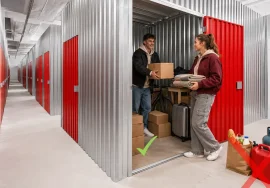
City Storage Budapest offers clean, dry, climate-controlled and pest-free units from 1 to 50 m² at its Basilica and Kispest locations. Units are monitored by security cameras and can be locked with your own padlock. 24/7 key-card access, lifts, trolleys and pallet jacks make moving belongings easier, and flexible unit changes help if your space requirements change. For guidance, read our article on choosing the right storage unit size.
6. Gather the right packing materials
Use sturdy boxes in several sizes. Smaller boxes are better for books and other heavy items, while larger boxes work well for light textiles. You may also need strong packing tape, markers, packing paper, bubble wrap, corner protectors, dust sheets, moving blankets and sealable bags for screws and fittings.
7. Sort before you pack
Place every item into one of five categories:
- Moving with you: it has a clear purpose and a place in the new home.
- Going into storage: you want to keep it, but do not need it immediately.
- For sale: it is in good condition, but you no longer use it.
- For donation: someone else could still use it.
- For disposal or recycling: it is broken, unusable or requires specialist waste handling.
Do not automatically pack everything. Moving and storing items you no longer need costs time, space and money.
Moving checklist for 2 weeks before the move
8. Plan address updates and service changes
Make a separate list of the organisations and providers that may need your new address or updated contract details. These can include utility companies, internet and insurance providers, your bank, employer, healthcare provider, school, subscriptions and regular deliveries.
Official address and accommodation reporting procedures in Hungary depend on your citizenship and residence status. Hungarian citizens can check the current process on the official Hungary.hu address change page, which is in Hungarian. Non-Hungarian residents should check the rules that apply to their status. The National Directorate-General for Aliens Policing publishes English-language reporting obligations, including information for relevant residence permit holders. Always follow the latest official guidance.
9. Pack rarely used belongings first
Start with seasonal clothing, decorations, books, guest bedding, collections and kitchen equipment you rarely use. Keep items from the same room together whenever possible. Label each box with the destination room, a short description of its contents and a clear warning if anything is fragile.
10. Create a moving folder
Keep contracts, quotes, contact details, invoices, your inventory and all appointments in one digital or paper folder. Important documents, jewellery, cash, medication and personal electronics should travel with you rather than in the moving van.
What to do during the final week
11. Confirm every appointment
Reconfirm the date and arrival time with your movers, cleaners, technicians and storage provider. Check both addresses, contact numbers, parking arrangements and who will hand over the keys or access cards.
12. Prepare a first-day essentials box
Keep a separate bag or clearly labelled box for the first 24 to 48 hours. Include:
- identity documents, wallet, keys and phone;
- chargers and an extension lead;
- medication and essential toiletries;
- a change of clothes, towels and bedding;
- drinking water, simple food and cutlery;
- toilet paper, kitchen roll and bin bags;
- basic tools, scissors and packing tape;
- essential items for children or pets.
13. Prepare furniture and appliances
Label dismantled furniture parts and place screws and fittings in named, sealable bags. Secure doors and drawers without applying strong adhesive directly to delicate surfaces. Empty, clean and prepare appliances according to the manufacturer's instructions. Refrigerators and washing machines may have specific transport requirements, so check the relevant manual before moving them.
Help with moving, packing and packing materials
Would you prefer help with the move or with packing?
Contact us. City Storage can recommend trusted moving partners in Budapest. Subject to availability and prior arrangement, they may also pack selected belongings professionally and supply the necessary packing materials.
It is usually better to complete packing 1 or 2 days before the move rather than starting on moving morning. This allows loading to begin on time and reduces the risk of the entire schedule slipping. Availability, the exact scope of the service and pricing must always be agreed in advance.
The day before moving
- Finish packing and keep only the first-day essentials separate.
- Count and, if possible, number your boxes.
- Clear walkways and access routes.
- Protect floors, corners and door frames where necessary.
- Charge your phones and save all important contact numbers.
- Photograph the condition of the property you are leaving.
- Arrange a calm and safe place for children and pets.
- Prepare water and simple food for moving day.
Moving day checklist
- Keep documents, keys, medication and valuables with you.
- Show the movers which items go to the new home and which go into storage.
- Point out anything fragile, unusually heavy or requiring special handling.
- Check the number of boxes and large items before departure and after arrival.
- Photograph meter readings if required for the handover.
- Check cupboards, storage areas, the cellar, attic and balcony before leaving.
- Inspect windows, taps, electrical appliances and keys.
- At the new home, position large furniture first and open boxes afterwards.
What should go into temporary storage?
Not everything needs an immediate permanent place in your new home. Suitable items may include clean, dry and properly packed furniture, moving boxes, books, clothes, sports equipment, seasonal belongings and household items. Storage can also help if you have not yet decided which furniture to keep or if you want to paint, repair and clean the new property before unpacking fully.
Food, perishable goods, hazardous or flammable materials and illegal items must not be placed in a storage unit. Before moving in, read our guide to what can and cannot be stored, and ask us if you are unsure about a particular item.
What to do after moving in
- Check that every box and piece of furniture has arrived.
- Report any damage or missing item promptly and keep the documentation.
- Make the bed, bathroom and basic kitchen equipment usable first.
- Unpack one room at a time instead of opening every box at once.
- Complete any remaining address and service updates.
- Pass on, recycle or keep empty boxes for later transport.
- Maintain an inventory of stored belongings and schedule a future review.
Quick printable moving checklist
- ☐ Moving date confirmed
- ☐ Budget prepared
- ☐ Inventory and photographs completed
- ☐ New home and access routes measured
- ☐ Movers booked
- ☐ Packing support arranged if required
- ☐ Packing materials obtained
- ☐ Unwanted belongings sorted
- ☐ Storage unit booked if required
- ☐ Address and service update list prepared
- ☐ Boxes labelled by room
- ☐ Important documents and valuables packed separately
- ☐ First-day essentials box ready
- ☐ Appointments and contact details reconfirmed
- ☐ Condition of the old property documented
- ☐ Meter readings recorded if required
- ☐ Every room and storage space checked before leaving
Frequently asked questions about planning a move
When should I start planning my move?
Ideally, start 6 to 8 weeks in advance. A shorter period may be enough for a small local move, but movers, packing support and storage should still be reserved as early as possible.
Does City Storage provide moving and packing services?
City Storage primarily provides self storage units. However, we can recommend trusted moving partners. Subject to prior arrangement, they may also provide packing services and packing materials. Contact us and tell us what kind of help you need.
Can my belongings be packed on moving day?
It is usually better to arrange packing 1 or 2 days before moving. If packing begins on moving morning, loading can be significantly delayed. Always agree the date and exact scope of work with the service provider in advance.
What size storage unit do I need when moving?
The right size depends on the volume of your belongings, whether furniture can be dismantled and how efficiently everything is packed. Do not rely only on the floor area of your home. Prepare a detailed list and photographs so that the storage provider can recommend a suitable option. City Storage Budapest also offers flexible unit changes if your requirements change.
How long can I rent a storage unit?
Self storage can be useful for both shorter and longer periods. It works well when your moving dates do not align, the new property is being renovated or you need more time to decide what to do with certain furniture. Ask for current, personalised rental conditions.
How should I protect furniture during moving and storage?
Clean and dry each item completely before packing. Protect corners, secure moving parts and label dismantled components. Do not apply strong tape directly to delicate surfaces. Our guide comparing seven furniture storage options during a move provides further practical advice.
Plan your move with City Storage Budapest
A clear moving checklist reduces last-minute stress, but you do not have to handle every task alone. If you need temporary or longer-term storage, we can help you choose an appropriately sized unit. We can also recommend a trusted moving and packing partner who may provide packing materials by prior arrangement.
Request a quote from City Storage Budapest and tell us if you also need help with moving or packing.